On this page
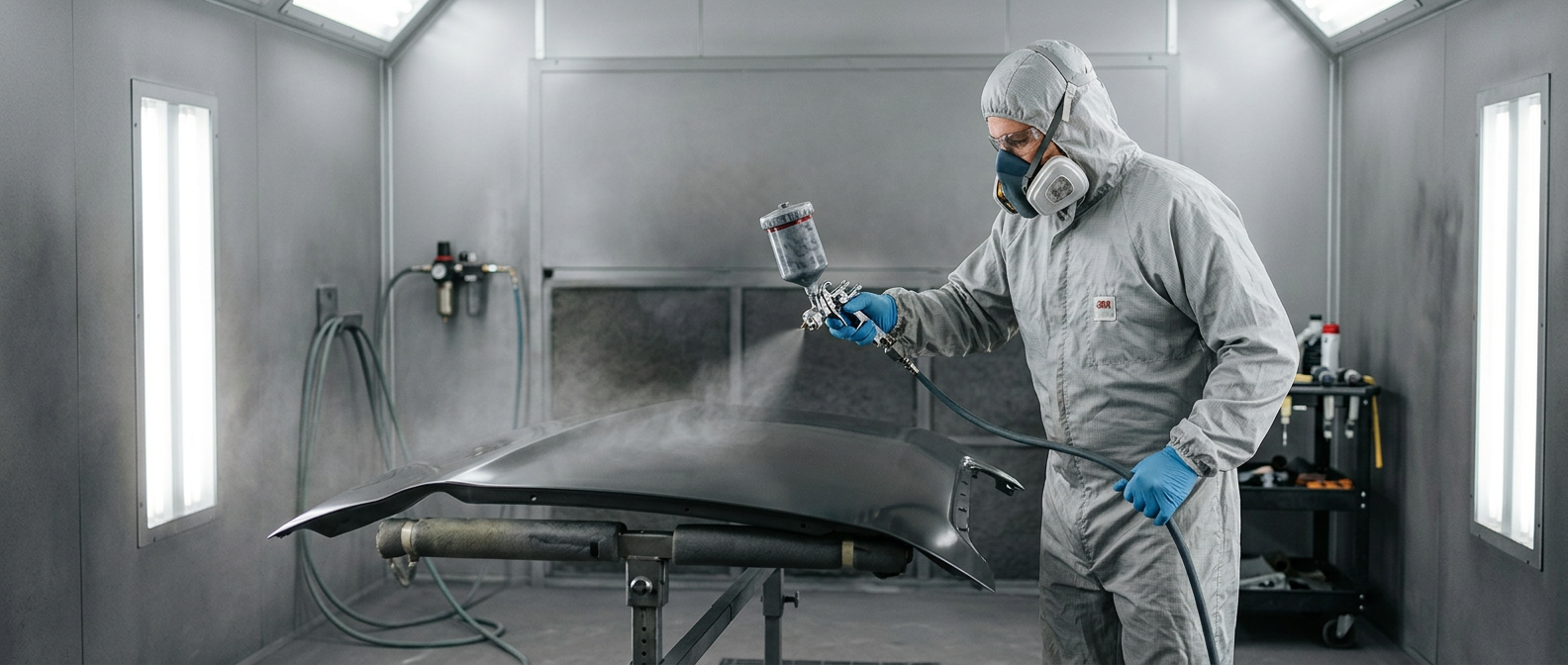
Professional spray-applied protection generally involves inspection, surface preparation, masking, controlled application, processing and final inspection. Exact procedures, equipment and environmental conditions vary by manufacturer.
Inspect and prepare
The installer records paint condition, identifies repairs and verifies compatibility. The vehicle is cleaned and decontaminated; paint correction may be considered where needed. Masking helps protect adjacent areas. Products and cleaning methods must be suitable for the surface and specified system.
Control the application environment
Temperature, humidity, ventilation, cleanliness and lighting can affect work quality and safety. Application equipment and personal protective equipment must follow the product’s safety data sheet and technical instructions. A professional facility should explain its controls.
Apply and process
Spraying technique, overlap, distance and material delivery follow product-specific instructions. Do not use a generic recipe for pressure, ratio or coat count. The installer should observe specified flash, drying or curing times and protect the vehicle during that period.
Inspect and document
Final inspection checks appearance, coverage and defects against the agreed standard. The customer should receive aftercare instructions, product identification, warranty documents and a record of the installation. Keep these records for future service or removal.
Related questions
How is Paint Protection Spray applied?+
Professional systems typically require inspection, preparation, masking, controlled application and product-specific drying or curing. Follow the manufacturer’s instructions.
Is PPS applied directly to car paint?+
Some products are applied over prepared paint, while compatibility may depend on the finish and existing treatments. Confirm with the maker and installer.
Continue learning
Explore LIQVIX
Learn about the LIQVIX product and its documented specifications.