Decision guide / LIQVIX PPS and conventional PPF
Paint Protection Spray vs PPF: Seven Important Differences.
LIQVIX is a clear peelable primer system applied by spray and finished with compatible automotive clear coat. Conventional PPF is a pre-manufactured film. Compare how those different systems affect coverage, installation, finishing and colour—then verify details for the products and scope you are considering.
22 comparison points
Different systems. Different trade-offs.
PPF construction, patterning and installation vary by manufacturer and installer. LIQVIX-specific technical and compatibility claims require confirmation against current approved documentation.
Swipe horizontally to view both systems.
| Characteristic | LIQVIX Paint Protection Spray | Conventional PPF |
|---|---|---|
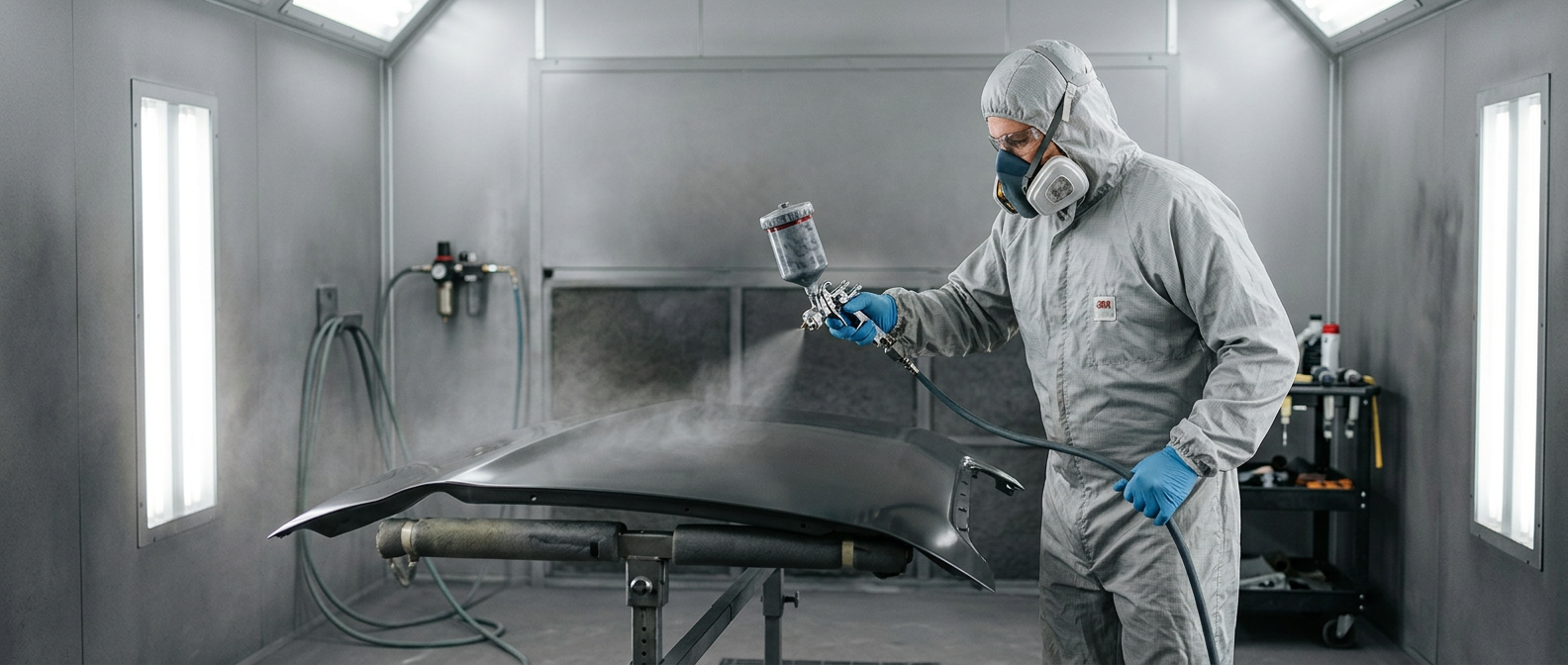
| Application method | Professionally spray-applied primer, then compatible automotive clear-coat finishing. | Pre-manufactured film positioned and fitted to selected vehicle panels. |
| Underlying structure | Clear peelable primer system with a compatible clear-coat finishing layer. | Film substrate with an adhesive system; construction varies by product. |
| Coverage possibilities | Can be applied continuously over selected suitable surfaces, subject to access and substrate compatibility. | Coverage is planned with film pieces, patterns, panel geometry and installer method in mind. |
| Door jambs | Jambs and internal edges can be coverage candidates where accessible, compatible and approved. | May be available as an added or custom scope; access and package coverage vary. |
| Complex contours | Spray can follow suitable contours and recesses without fitting a separate film piece to each area. | Film conformability, patterns, reliefs and technique vary by film and installer. |
| Seams and joins | No joins between film pieces across a continuously spray-coated suitable area; boundaries still depend on scope. | Separate pieces may create joins or edges; visibility depends on pattern, panel and installation. |
| On-car film cutting | Conventional PPF film cutting on the vehicle is not part of the spray application. | Some installation methods cut or trim film on or near the vehicle; other methods use pre-cut patterns. |
| Blade-mark exposure | Avoids the blade-contact risk associated with conventional on-car film trimming; it is not a claim that no tools are used. | Blade exposure depends on pattern, trimming method and installer technique. |
| Adhesive system | Does not rely on a conventional pressure-sensitive PPF adhesive layer. | Typically uses pressure-sensitive adhesive; confirm the construction of the specific film. |
| Adhesive residue on removal | No residue from a conventional PPF adhesive layer, because that layer is not used; other removal outcomes depend on conditions. | Adhesive residue can occur; amount and removal vary by product, age and process. |
| Peelability | Designed as a peelable system; removal must follow approved instructions and consider substrate condition. | Many films are professionally peeled from the surface; adhesive and paint condition affect removal. |
| Paint-like finishing | A compatible automotive clear coat completes the system and can support appropriate finishing practices where approved. | Film is finished as a film surface and is not treated like automotive paint in the same way. |
| Sanding and correction | May be appropriate during paint preparation or the approved LIQVIX finishing stage, within documented build and process limits. | Film surface care and correction are product-specific; sanding through film is not equivalent to paint finishing. |
| Clear protection | Clear primer and compatible clear coat are designed to preserve the underlying vehicle colour. | Clear film options are widely used; optical appearance varies by film and installation. |
| Coloured protection | Can support customized coloured spray protection through compatible coating formulations. | Coloured film options depend on the pre-manufactured range available from each supplier. |
| Colour customization | Colour matching may be explored; pigment compatibility and appearance require approval and a test process. | Selection is generally from available film colours; supplier ranges and custom offerings vary. |
| Pre-manufactured colour inventory | Does not require a separate pre-manufactured coloured film roll for every requested colour. | A coloured film option may require sourcing or holding a roll in the selected colour. |
| Removal process | Follow the approved LIQVIX peel/removal process; outcome depends on substrate, condition and installation. | Use the specific film manufacturer’s professional removal guidance. |
| Installation requirements | Professional spray equipment, suitable preparation and controlled application/clear-coat finishing. | Film fitting skills, patterning, positioning and edge finishing; methods vary. |
| Maintenance | Follow current LIQVIX care instructions for the complete installed system. | Follow the specific film manufacturer’s maintenance instructions. |
| Repair and refinishing | Appropriate correction may be possible within the approved system and material limits. | Localized film repair or replacement may be considered; approach depends on damage and product. |
| Cost considerations | Depends on vehicle, preparation, selected coverage, colour, materials and labour; request a written quote. | Depends on film type, coverage, vehicle, pattern complexity, preparation and labour; request a comparable quote. |